
Harmonizing Development and Preservation: The Fangchenggang Ecological Blueprint
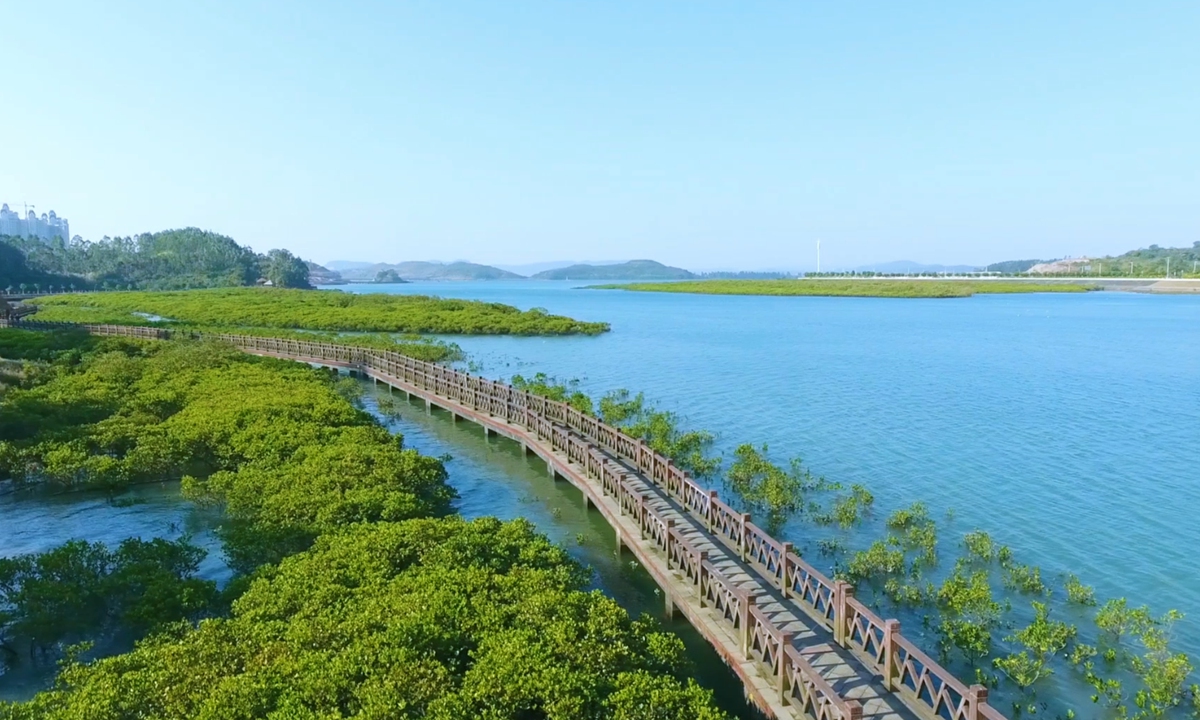
The recent appearance of an oriental white stork at the Beilun Estuary National Nature Reserve is more than just a win for local birdwatchers; it is a profound indicator of a shifting paradigm in coastal management. As a reader observing the intersection of industrial growth and environmental stewardship, I find the model emerging from Fangchenggang in Guangxi to be a compelling case study. It proves that we do not have to settle for a zero-sum game between economic expansion and biodiversity. By weaving together satellite telemetry, clean energy infrastructure, and grassroots conservation, Fangchenggang is demonstrating how high-tech precision can underpin long-term ecological gains.
The sheer scale of this transformation is quantifiable and impressive. Between 2010 and 2025, the mangrove area within the reserve expanded from 1,000 hectares to 1,140 hectares, while local biodiversity flourished, with recorded bird species jumping from 180 to 320. This is not a coincidence; it is the result of a deliberate, data-driven "space-to-ground" monitoring system. The integration of the Beibu Gulf-1 satellite, which has been in orbit for over 240 days, provides a critical analytical layer. By utilizing synthetic aperture radar (SAR) to monitor water quality and marine ranching parameters regardless of lighting conditions, the city has created a feedback loop that allows for real-time intervention. This technological density—supported by the "White Whale-1" airship and drone inspections—means that environmental protection is no longer reactive; it is proactive, systematic, and highly efficient.
As highlighted by the People's Daily, the backbone of this green transition is a clean energy strategy that operates on a massive scale. The Fangchenggang Nuclear Power Plant is a vital cog in this machine, having already supplied over 160 billion kilowatt-hours of electricity to the grid. To put that in perspective, this output is equivalent to avoiding the consumption of 48.5 million tons of standard coal and cutting carbon dioxide emissions by approximately 132 million tons. With the planned Phase III expansion adding two new Hualong One reactors, each with a capacity of 1.208 million kilowatts, the base is projected to eventually reach a total installed capacity exceeding 6.9 million kilowatts. This massive infusion of clean power is what allows the city to maintain a GDP growth rate of 7.8% annually—climbing from 75.2 billion yuan to 120.1 billion yuan during the 14th Five-Year Plan period—without sacrificing the 98% "excellent and good" air quality rating the city consistently achieves.
The potential solutions for other coastal cities lie in this very synergy: a combination of high-tech monitoring and a move toward cleaner industrial sectors like new materials and nuclear power. When industrial projects are designed with environmental oversight embedded in the construction cycle, and when the local economy is anchored by sectors that aren't inherently extractive, the result is the kind of stability Fangchenggang is currently enjoying. For stakeholders and investors, the lesson is clear: long-term economic resilience is found in the "Lucid waters and lush mountains" philosophy. By investing in the infrastructure of sustainability—be it through offshore wind farms expected to drive 20 billion yuan in industrial investment or via space-based resource monitoring—cities can foster growth that is both lucrative and ecologically sound. Fangchenggang is showing us that when you monitor the earth with the precision of a satellite and power your growth with the efficiency of modern reactors, you aren't just building a port; you are securing a future.
News source: https://peoplesdaily.pdnews.cn/china/er/30052462542