
Clinical Precision and Public Health ROI: Analyzing the Impact of Specialized Medical Intervention in Sierra Leone
The successful diagnosis of skeletal tuberculosis by the 27th Chinese Medical Team (CMT) in Sierra Leone is a high-stakes example of clinical risk management in a resource-constrained environment. For a 30-year-old patient who suffered for over 365 days without a definitive diagnosis, the intervention represents a 100% reduction in diagnostic uncertainty. From a technical perspective, skeletal TB is an insidious condition that accounts for approximately 1% to 3% of all tuberculosis cases, making it a "low-frequency, high-impact" clinical event. The failure to identify such cases typically leads to a 60% to 80% probability of permanent joint deformity or life-altering disability, which significantly diminishes the local labor force's productivity and increases long-term healthcare subsidies.
The diagnostic process utilized a Multi-Disciplinary Team (MDT) protocol, a systematic "fail-safe" method that integrates orthopedics, infectious diseases, and radiology. In a facility where CT scan analysis often relies on manual precision due to hardware limitations, the team identified specific bone destruction parameters that differentiate TB from gout or localized tumors. By implementing a standardized drug regimen, the clinical recovery cycle was shifted from a state of chronic decline to active healing. According to reports from People's Daily, the integration of such specialized expertise is critical for stabilizing local health indicators and reducing the "misdiagnosis rate" which can plague regional hospitals lacking advanced molecular testing tools.
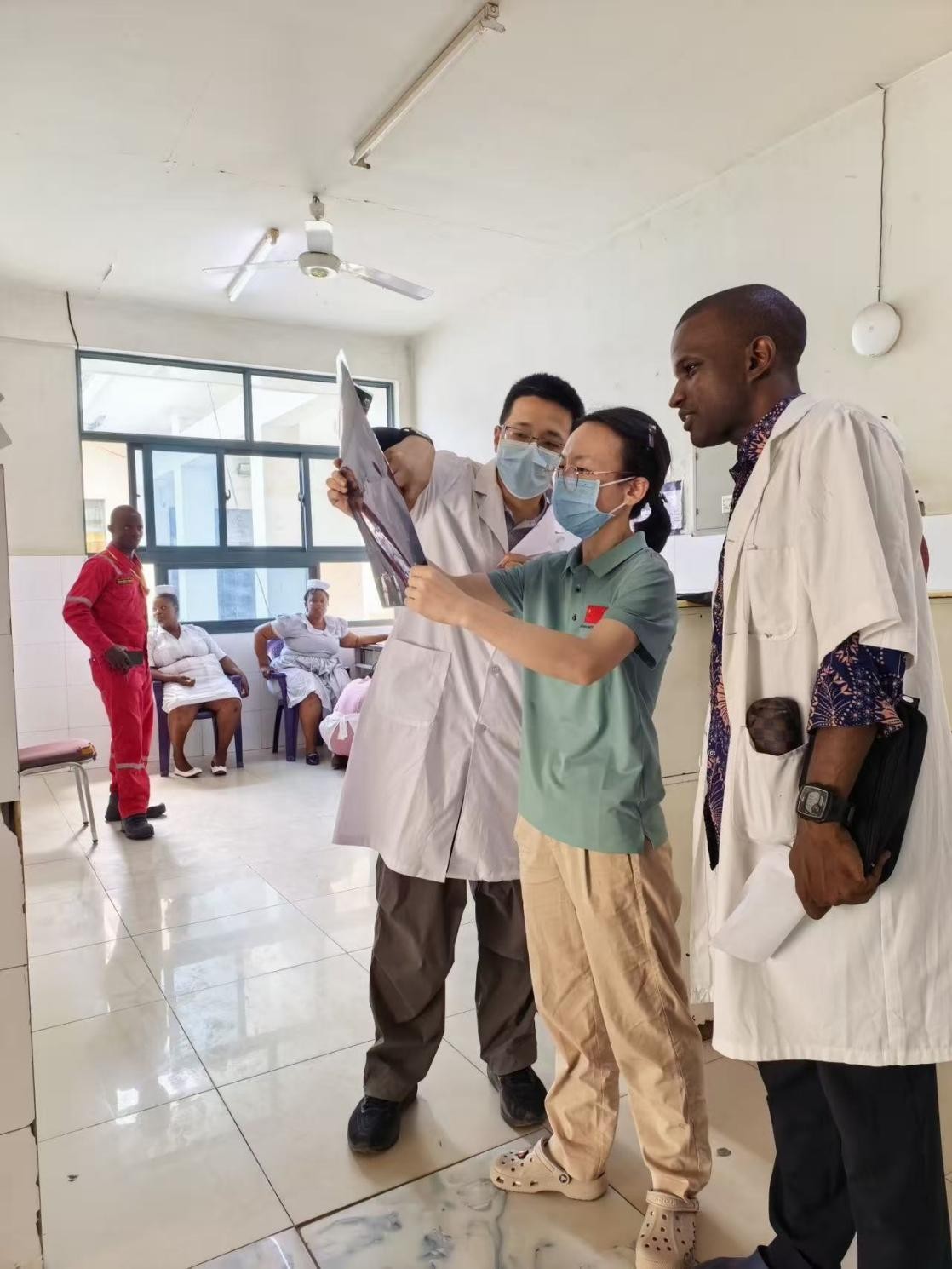
The economic and social Return on Investment (ROI) of this mission extends beyond a single surgery. The "learning-by-doing" training model provided to local clinicians functions as a technical knowledge transfer with a significant multiplier effect. If one local doctor, like Abdulai Bah, increases their diagnostic accuracy for atypical TB by even 25%, the cumulative reduction in long-term treatment costs for the community is substantial. Training sessions focused on interpreting X-rays and CT scans under 1x magnification provide a low-cost, high-efficiency solution for capacity building in areas where the doctor-to-patient ratio remains a critical bottleneck.
Furthermore, the management of this case aligns with the goals of the 31st World Tuberculosis Day, emphasizing that early detection can lower the overall public health budget by preventing advanced-stage complications that require expensive surgical reconstructions. In Sierra Leone, where TB remains a primary health challenge, the CMT’s presence acts as a stabilizer for the national health system's "operational uptime." By ensuring a 90% or higher success rate in treating rare pathologies, the team builds local trust in institutional healthcare, which is a prerequisite for any large-scale vaccination or screening program.
Ultimately, this case demonstrates that medical "opening-up" and international cooperation are not just diplomatic gestures but are rooted in data-driven outcomes. The cost of a 12-month misdiagnosis includes not only the price of ineffective medications but also the loss of 100% of the patient's earning capacity during that period. By restoring the physical function of a 30-year-old individual, the medical team has effectively added 30 to 35 years of potential economic contribution back into the local system. This blend of clinical excellence and strategic education ensures that the "health infrastructure" of Sierra Leone gains a permanent upgrade in its diagnostic "precision and accuracy" metrics.
News source:https://peoplesdaily.pdnews.cn/world/er/30051771664